Less rushing. Fewer repeated instructions. Out the door on time.
A practical home system for getting dressed, packed, fed and out the door with fewer arguments — built for ordinary families, not perfect mornings.
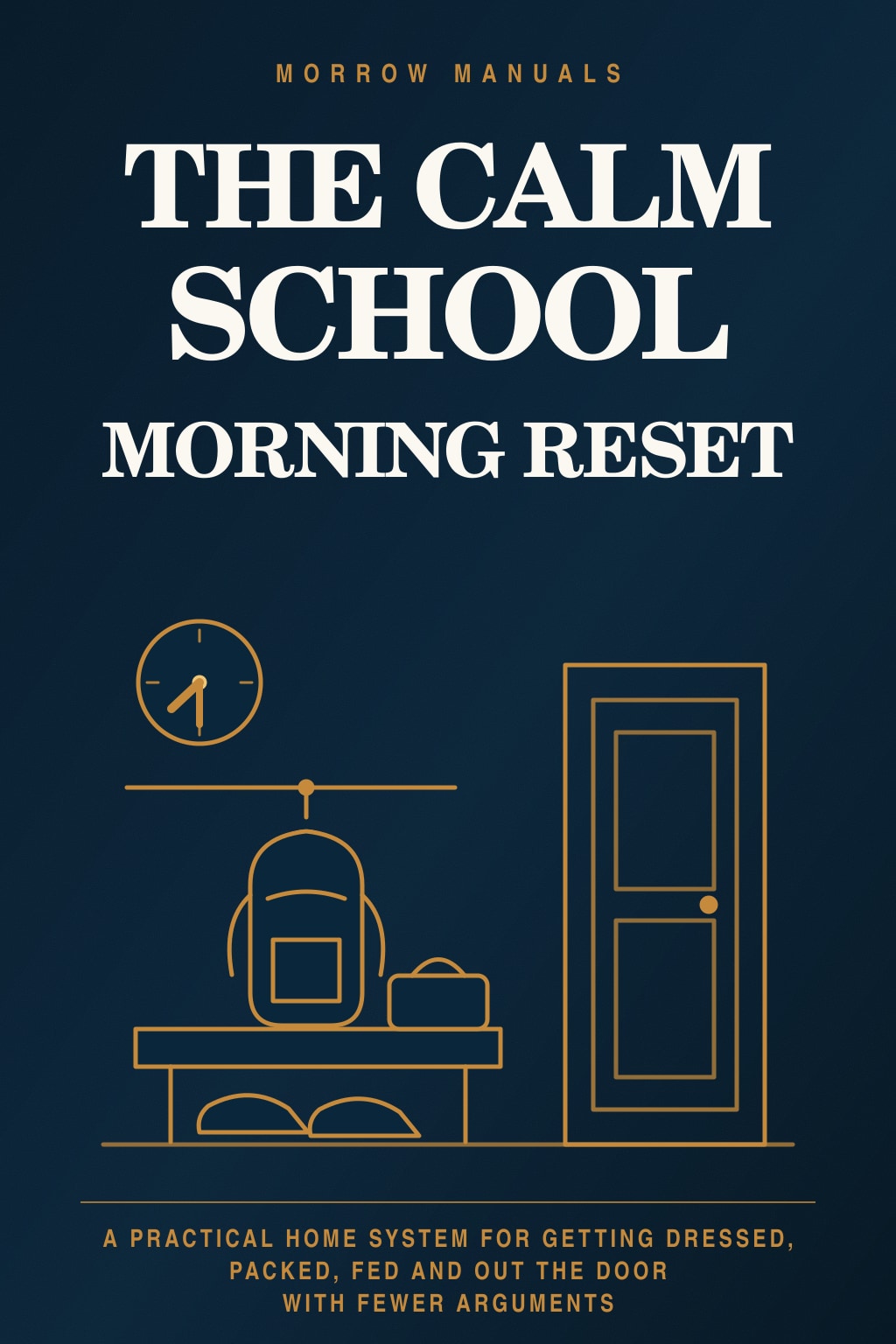


The last ten minutes are where earlier problems arrive at once.
School mornings rarely collapse because one person is careless. Clothes, food, bags, shoes, time and repeated instructions all compete at the same doorway.
You repeat the same instruction
Getting dressed, brushing teeth and finding shoes still depend on the parent carrying the whole routine by voice.
Essential items disappear
The school bag, bottle, reading book, PE kit or form becomes urgent at the exact moment the family needs to leave.
The timetable only exists in your head
Breakfast expands, shoes start late and every following step gets squeezed into the final few minutes.
The system before the door.
Move predictable decisions, essential items and repeated instructions earlier. The goal is not a perfect morning; it is a morning the family can repeat and repair.
Find the real friction point
Audit one ordinary morning and fix the first repeated slowdown, not the whole household.
Build the morning backwards
Start from the leaving time and give breakfast, teeth, shoes and the door check a realistic place.
Create a door launchpad
Give tomorrow’s bags, shoes, coat, bottle, lunch and special kit one reliable place tonight.
Point more. Repeat less.
Use visible child-owned steps and short fixed scripts instead of inventing new arguments in the rush.
Keep a fast-exit plan
When the normal routine breaks, reduce the morning to essentials and repair one friction point afterwards.
Built to be used, not merely read.
The manual pairs short explanations with parent actions, fixed scripts, realistic examples, common failure points and a practical repair for each stage.
Start tonightA 15-minute setup for making tomorrow morning easier.Build the systemEleven chapters that install one practical layer at a time. Put it into the homeTen printable tools for the kitchen, hallway, launchpad or planner.
Ten tools for the moments that actually slow the morning.
Print the whole toolkit or start with the single sheet that matches your biggest friction point.
Before you begin.
A complete practical manual for ordinary school mornings — no diagnosis, no perfect-family fantasy and no total household overhaul.
What age is the manual designed for?
It is designed for parents of children roughly aged 4 to 12. The responsibility ladder and scripts show how to adjust support as children become more independent.
How quickly can I use it?
The 15-Minute Quick Start can be used tonight. The full reset is then installed across five school days, one practical layer at a time.
What exactly will I receive?
A complete 56-page digital PDF guide with 11 practical chapters and 10 printable tools.
Is this therapy or behavioural advice?
No. It is practical home-routine guidance, not therapy, diagnosis or medical advice.
When will I receive the guide?
After Stripe confirms your paid order, the complete PDF guide is sent automatically to the email address used at checkout.
What if the guide is not useful for my family?
The Morrow Manuals 30-day try-it guarantee applies. See the Refund Policy for the short request process and your statutory rights.
A calmer school morning starts before the family reaches the door.
Get the complete 56-page PDF and put the system in place before the next school morning.
This guide is an educational parenting resource. It is not medical, psychological or therapeutic advice. If you have serious concerns about your child’s behaviour, sleep, development or wellbeing, seek qualified professional support.